

EN / FR
In health care, there should always be enough nurses to provide patients with the highest quality of care. Nurse-patient ratios support safe and manageable workloads, so nurses can do just their work. In turn, as working conditions improve, nursing jobs become more sustainable over a career span. Research shows that countries with safe nurse‑patient ratios see improved patient outcomes, lower mortality, fewer complications, and they even save health systems money.
It's time to bring safe nurse‑patient ratios to all health care settings across Canada.
Nurse staffing has been a focal point of health care research and policy development for decades, recognized widely for its critical role in the quality and sustainability of health care systems. Despite repeated calls for change, inadequate staffing levels that are not based in evidence persist. Robust staffing models such as nurse-patient ratios not only support the delivery of high-quality care but also ensure health care systems are resilient, supportive of the nursing workforce and prepared to meet current and future demands.
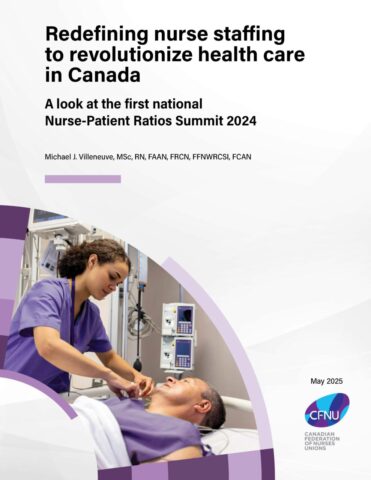
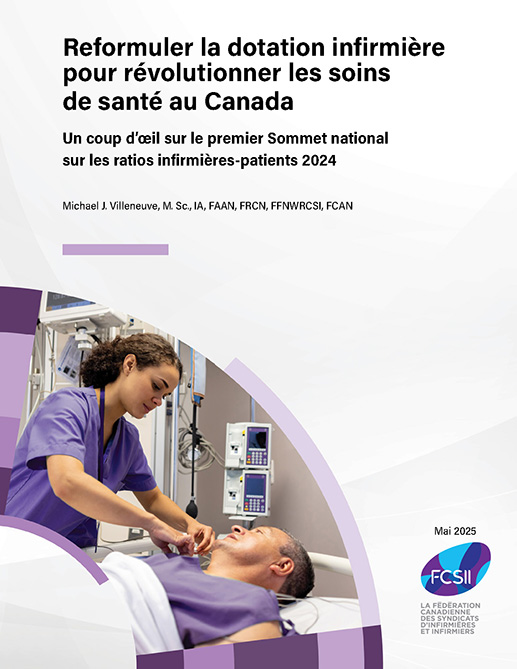
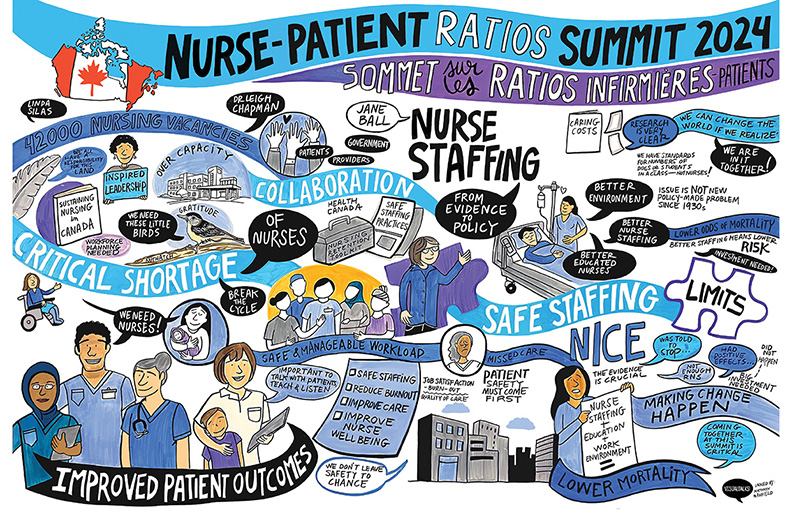
The CFNU led the charge and hosted the inaugural national summit on NPRs November 27‑28, 2024, to determine actionable next steps for guiding the development of safe mandated minimum NPR policies. These reports draw together existing knowledge around nurse‑patient ratios, highlight lessons learned and share recommendations that came from this historic summit.
Download full reportDownload summaryThe nurse-patient ratios evidence reports explore Canadian and global approaches to nurse staffing and consolidate research on the impacts of nurse staffing on patient, nurse and systemic outcomes. They present the current available academic research, legislation and policy efforts to inform future work in this area. These reports will serve as an evidence base for CFNU’s ongoing work to lead the spread and scale of nurse-patient ratios across Canada.
Download full reportDownload summary

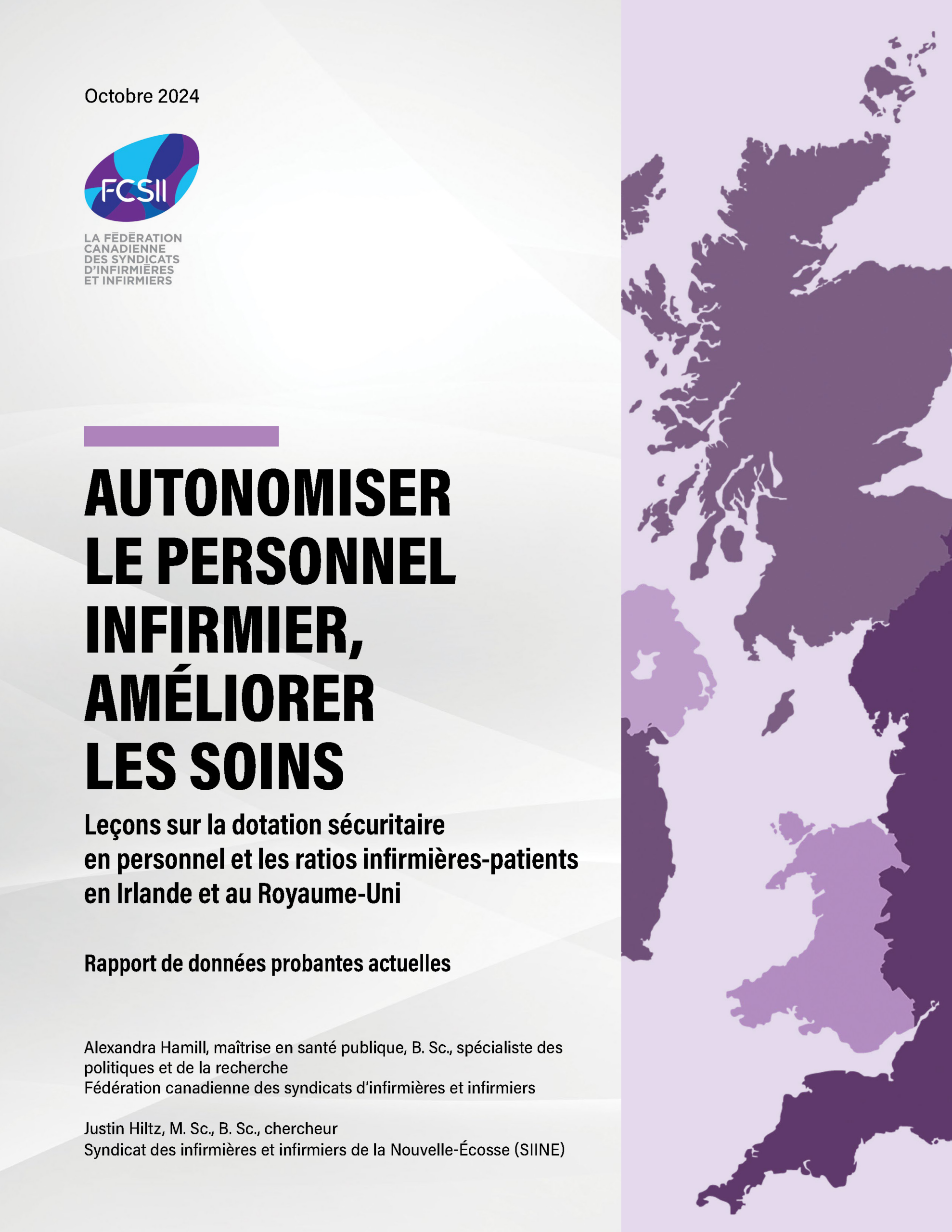
Nurses have long claimed that understaffing is one of the primary reasons they would consider leaving the profession. As recently as 2024, the CFNU reported that this was a primary reason 40% of members were considering leaving their job or profession. This tour aimed to address direct-care nurses’ concerns by exploring international solutions for safe NPR. Key objectives included meeting with various nursing and health care stakeholders, visiting frontline nurses to understand the impact of staffing ratios, examining different staffing frameworks, and gathering insights to inform discussions at the CFNU’s NPR Summit in fall 2024.
Download full report
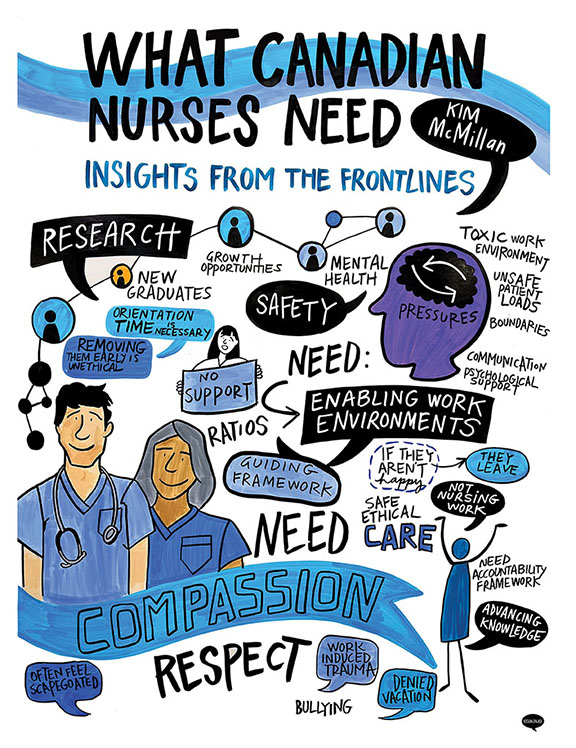
The Summit’s focus on nurse‑patient ratios was both timely and crucial for the safety of nurses and patients. This event provided an invaluable platform to share and discuss evidence-based strategies and experiences from Canadian and international examples such as British Columbia, Nova Scotia, California, Australia, and Wales.











The views expressed herein do not necessarily reflect those of Health Canada.
Canada has a critical shortage of nurses with 42,000 nursing vacancies and many nurses unwilling to work under the current conditions in the public system. In a recent CFNU survey of more than 5,000 nurses across the country, 70% reported their facility or workplace was regularly over capacity. Additionally, 40% are looking to leave their current job or the profession entirely within the next year.
Persistent nursing shortages across Canada make it imperative to shift the focus towards nurse retention strategies. In March 2024, Health Canada released the Nursing Retention Toolkit, which highlighted safe staffing practices as a key theme contributing to retention of nurses.1 Additionally, CFNU’s report Sustaining Nursing in Canada by Dr. Ben Ahmed and Dr. Bourgeault identified legislated minimum nurse-patient ratios as an immediate priority action to retain nurses.2 Evidence-based safe staffing practices support a safe and manageable workload for nurses, which ensures adequate care can be provided to patients and in turn mitigates turnover and improves overall nurse retention by making nursing jobs more sustainable over the career span.3,4,5
International jurisdictions such as California and Australia have mandated staffing ratios as a way of addressing nursing workload and improving patient care.6,7,8,9 Furthermore, research has associated minimum nurse staffing levels with improved patient outcomes and even financial savings to the health system by decreased length of stay, adverse events and reduced turnover.10,11
A wide body of academic literature over several decades has consistently found and continues to call for higher nurse staffing to improve nurse and patient outcomes. A 2023 paper by prominent researcher in the field Dr. Linda Aiken et al. recommends minimum nurse-patient ratios as an intervention to reduce burnout, improve care for patients and improve nursewell being.12 Furthermore, a recently published 2024 systematic found that lower nurse staffing levels are associated with adverse events, including increased length of stay, patients leaving without being seen and increased length of stay in emergency rooms.13 Nurse‑patient ratios are a promising evidence‑informed policy option for improving nurse retention and patient care, but Canada does not yet have a national framework or mandate for implementing nurse-patient ratios.
Momentum is building in some jurisdictions in Canada, and appetite for ratios is growing with the looming nursing workforce crisis. In April 2023, the British Columbia Nurses’ Union reached an agreement with the BC Ministry of Health, which included establishing minimum nurse‑patient ratios. This made B.C. the first province to implement nurse‑patient ratios in the country. In the months following, the Nova Scotia Nurses’ Union signed an agreement with the provincial government, that included a commitment to develop a safe staffing framework to determine the appropriate number of nurses for safe care.
Now is an opportune moment to explore safe staffing approaches that have been introduced across Canada and internationally, and to examine the potential for spread and scale to other provincial/territorial jurisdictions. The Nurse‑Patient Ratios Summit 2024 welcomes the voices of diverse stakeholders to determine actionable and evidence-informed next steps towards safe NPR policy action.
In a recent CFNU survey of more than 5,000 nurses across the country, 70% reported their facility or workplace was regularly over capacity. Additionally, 40% are looking to leave their current job or the profession entirely within the next year.
Research has associated minimum nurse staffing levels with improved patient outcomes and even financial savings to the health system by decreased length of stay, adverse events and reduced turnover.10,11
A variety of Canadian and international guests shared examples of evidence-based strategies and experiences. Distinguished presenters and panelists included:
The event was facilitated by Gerard Murphy of Barefoot Facilitation.
Download the Nurse-Patient Ratio Summit 2024 report by Michael J. Villeneuve, MSc, RN, FAAN, FRCN, FFNWRCSI, FCAN, of Michael Villeneuve Associates, below.











Below is a collection of press releases related to CFNU's work advocating for nurse-patient ratios in Canada. To see all news and reports from the CFNU visit our website.









From coast to coast to coast, we acknowledge the ancestral andunceded territory of all the Inuit, Métis and First Nations Peoples that call this land home. The Canadian Federation of Nurses Unions is located on the traditional unceded territory of the Algonquin Anishnaabeg People. As settlers and visitors, we feel it’s important to acknowledge the importance of these lands, which we each call home. We do this to reaffirm our commitment and responsibility to improve relationships between nations, to work towards healing the wounds of colonialism and to improve our own understanding of local Indigenous Peoples and their cultures
The Canadian Federation of Nurses Unions (CFNU) is Canada’s largest nurses’ organization, representing frontline unionized nurses and nursing students in every sector of health care – from home care and LTC to community and acute care – and advocating on key priorities to strengthen public health care across the country. We are proud to advocate for our members and promote the nursing profession on the national level, and we work tirelessly to protect the quality of health care for our patients and our universal public health care system.
Visit nursesunions.ca